
Flow-field electrolyser
Technology delivered, Q1 2025
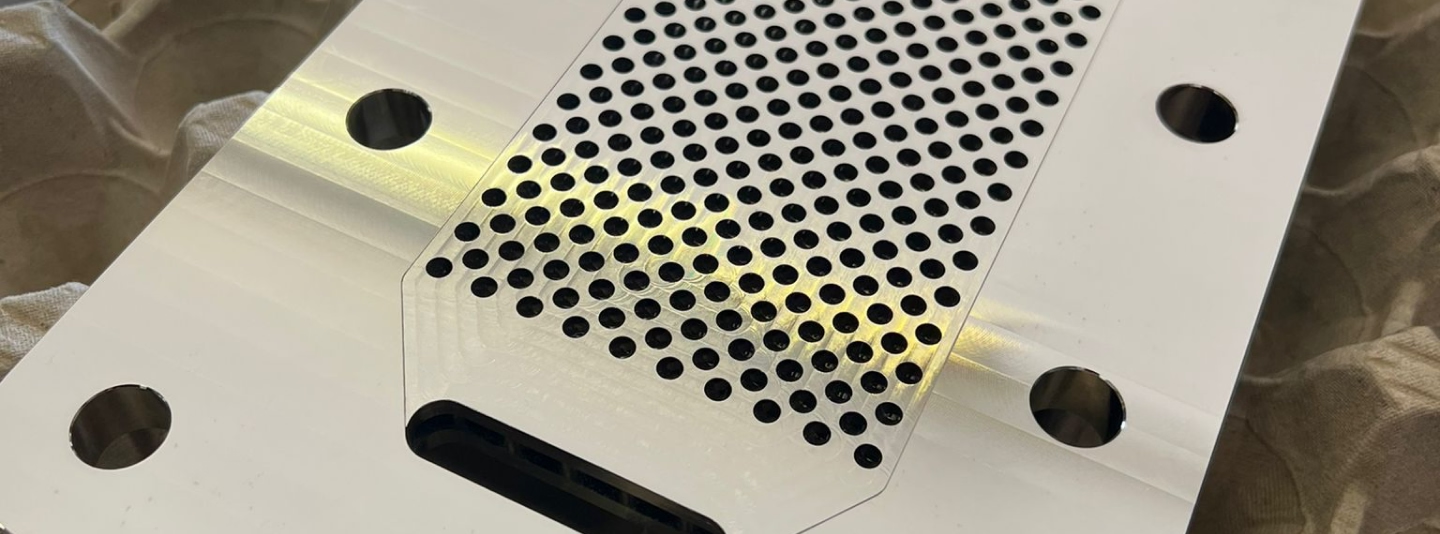
B9's flow-field electrolyser is a new electrolyser design that uses no platinum-group metals and 3D-printed flow plates, aiming to cut the cost of green hydrogen. The design aims to be smaller, lighter, more efficient and cheaper than conventional electrolysis systems. The modular design targets a 25-year uninterrupted system life and up to 40% lower green hydrogen production costs.
Project overview
B9's flow-field electrolyser addresses issues with conventional electrolysis systems (PEM, alkaline and SOEC) by aiming for a smaller, lighter, more efficient, cheaper to own, safer and more reliable machine that does not rely on platinum-group metals, is completely recyclable, and has an expected uninterrupted lifetime of 25 years for the system. It uses a standard modular plant design to minimise the risk of large-scale deployment, reducing market risk because no infrastructure or retrofit restrictions will be encountered.
Technology and approach
In existing electrolyser designs, a semi-permeable membrane is used to avoid oxygen and hydrogen gas cross-over, which can cause inefficiencies or safety concerns. Our primary goal is to determine the optimal geometrical and operational conditions for flow through the electrolysis process that achieve an efficient separation with our customised module. Aided by detailed flow-field design, the project will find out whether this process can compete with conventional alkaline or PEM systems.
Our work will test new materials and coatings on the low-cost 3D-printed flow plates to validate the findings on the unit, and fabricate electrolyser components using 3D printing. Additive manufacturing allows rapid prototyping, lower costs and much lighter components. The bipolar plates and electrodes are the most expensive part of the stack, at nearly 40% of its cost. The flow-field electrolyser design is less complex, potentially more robust in harsh reaction environments, and cheaper.
Key features
- Flow-field design: flow geometry optimised for efficient gas separation without traditional membranes
- 3D-printed components: additive manufacturing for rapid prototyping, lower cost and lower weight
- No platinum-group metals: no reliance on expensive precious metals, reducing material costs
- 25-year target life: an expected uninterrupted operating life of 25 years for the system
- Modular design: a standard modular plant design to minimise deployment risk and infrastructure requirements
- Lower cost: targets up to 40% lower green hydrogen production costs, through lower capital and operating costs
Project status
The technology was delivered in Q1 2025.
Project details
- Technology
- Flow-field electrolyser
- Design
- Flow-field design, 3D-printed components
- Target cost
- Up to 40% lower green hydrogen production cost
- Target life
- 25 years' uninterrupted system operation
Working on something similar?
Tell us about your site and what you want to achieve, and we'll come back to you.